Maldives · 2026
StayGo
Product & full-stack web engineering
- Next.js
- React
- TypeScript
- Supabase
- PostgreSQL
- Tailwind CSS
- Leaflet

A daily-rent marketplace for the Maldives—POI-anchored discovery for guests, a vendor portal with a real-time room state engine, and WhatsApp-first conversion. Built with Next.js and Supabase; live at staygomv.com.
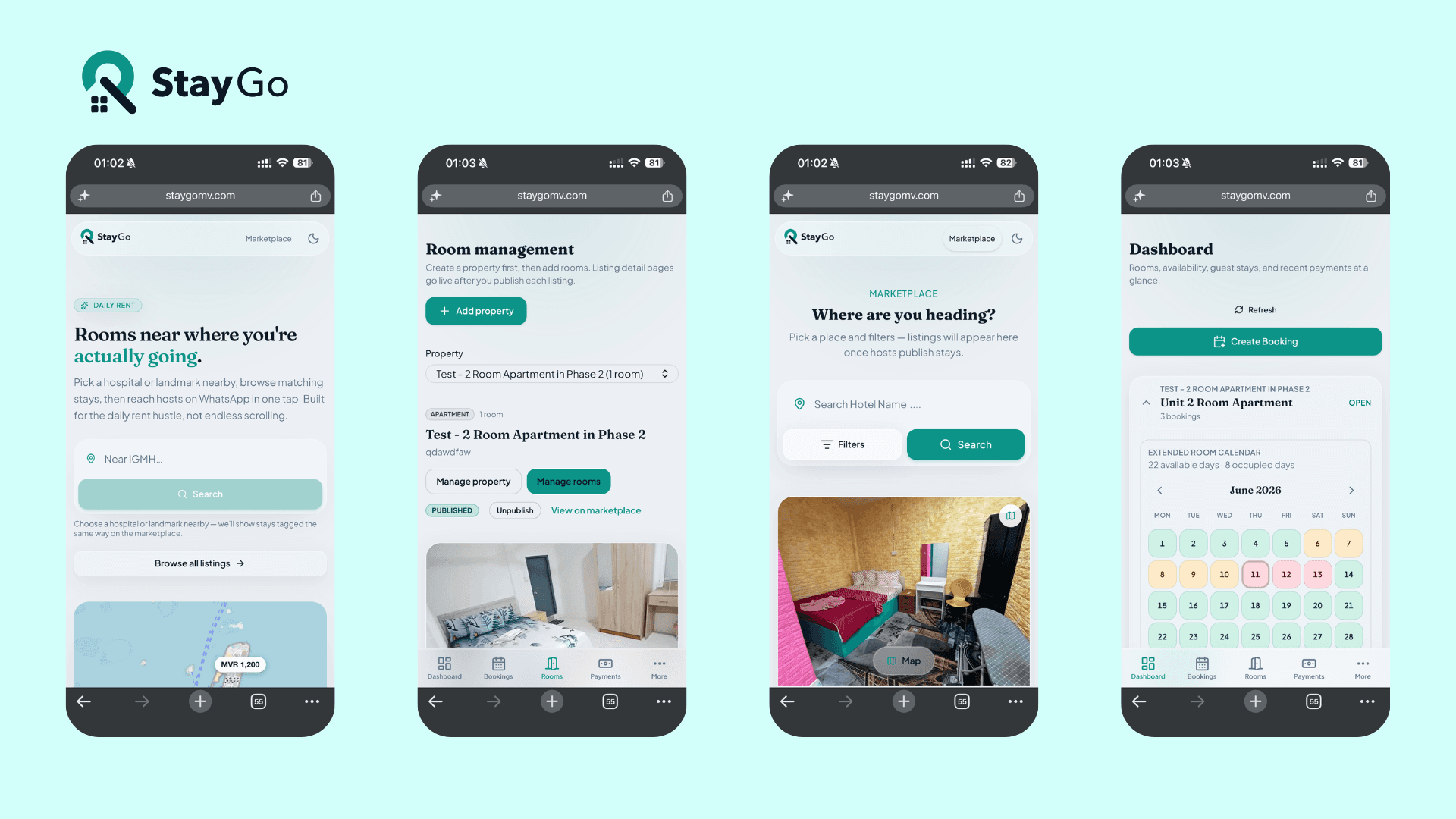
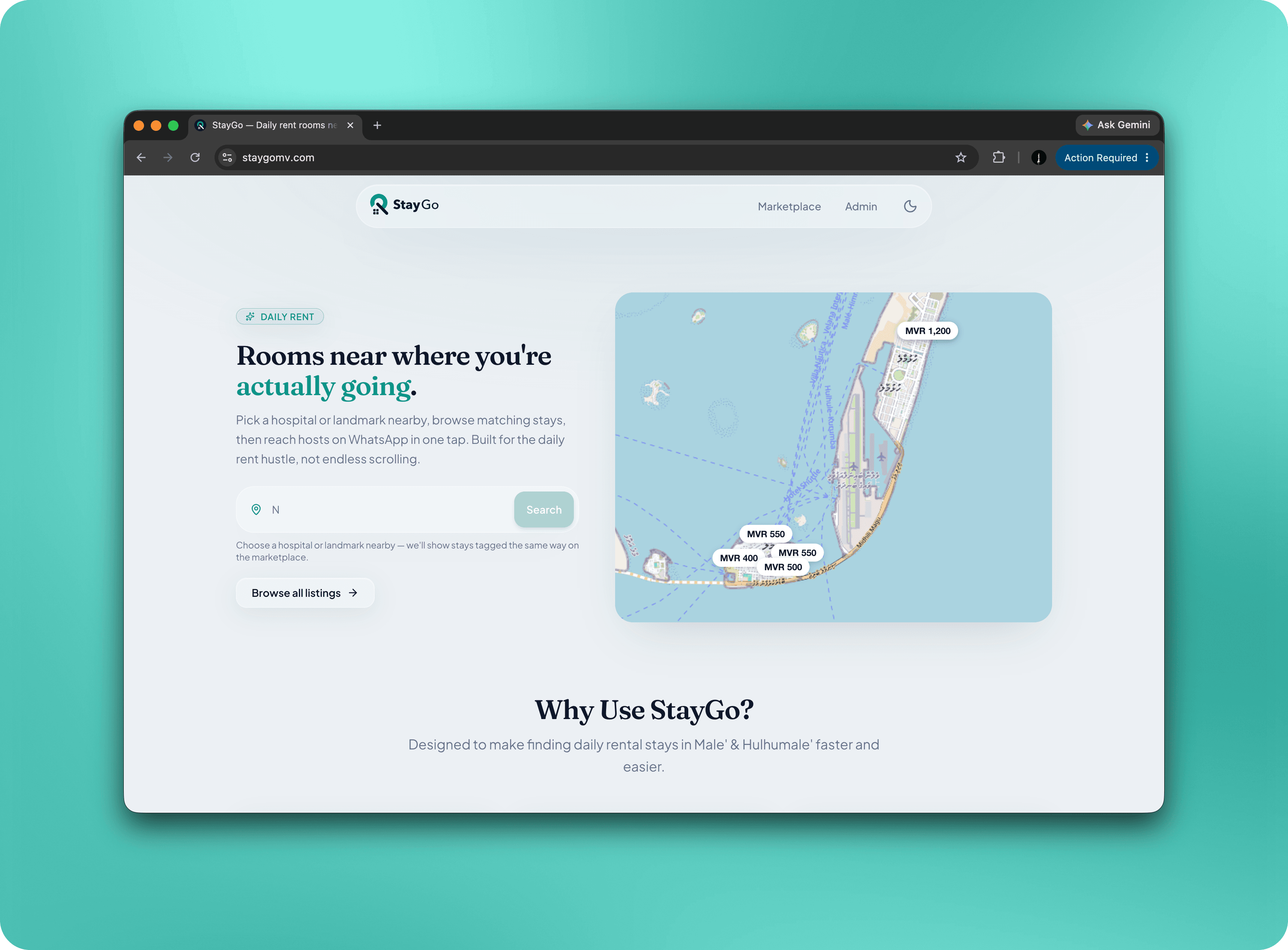
StayGo is a real-estate platform built for the Maldivian daily-rent market—typically 3–4 room properties in Malé and Hulhumalé. Guests search by where they’re actually going: hospitals like IGMH and ADK, ferry terminals, airport jetties, and other landmarks. Listings rank by proximity to the selected point of interest and by vendor activity, so the most relevant and recently maintained stays surface first.
Anchor search to the places guests are heading—not generic text boxes—so “2 mins walk to IGMH” becomes the headline, not an afterthought.
The public marketplace needs no login. Each listing card carries auto-generated availability signals (available, high demand, likely full), trust cues such as “last updated” timestamps and active-vendor badges, map pins relative to the chosen POI, and one-tap WhatsApp and call actions with pre-filled inquiry messages. Prices and exact room counts stay off the public surface so vendors keep control of negotiation.
Behind discovery sits a vendor portal and state engine: a Gantt-style room matrix where staff create holds (with a fixed 6-hour expiry), convert walk-ins to bookings, and manage check-in and check-out. Marketplace badges update in real time from portal actions—holds, bookings, and activity pulse—so guests see authoritative availability without manual double-entry. Role-based access separates owner, staff, and platform admin views, with owners seeing revenue and exports while staff stay operational.
WhatsApp stays the conversion channel; the portal is the source of truth that keeps the marketplace honest.
The stack is Next.js 16 with React 19 and TypeScript on the front end, Supabase for auth, PostgreSQL, and storage, plus Leaflet for map discovery and a glassmorphism design system tuned for mobile-first use. Server actions, tagged caching, and engagement analytics (listing views, map previews, contact clicks) support fast first paint and measurable funnel health. Development began in April 2026, with ongoing work on listing management, rich descriptions, portal polish, and platform analytics.